 This evening I was expecting to get a call to say that the new children’s home I and my fellow trustees were setting up in Kenya had had its final inspection and that the home manager Jec could get the last bit of paper we needed to open; a hygiene certificate of sort. I haven’t heard yet and I am wondering if there has been another hiccup. This was to be the last hoop we had to jump through and an infuriating one at that; after all what do they care about the welfare of the hundreds of street kids? Nought, yet they were not happy with us only using the 2 indoor toilets for now. No, we had to go and rebuild the outdoor ones too and the rest of it. All this, no doubt, because we always refuse to pay bribes. I repeat, always.
Many in international development have argued that corruption is the key element getting in the way of poverty reduction in developing countries. Others, like Jason Hickel say it’s not true. “According to the World Bank, corruption in the form of bribery and theft by government officials, the main target of the UN Convention, costs developing countries between $20bn and $40bn each year. That’s a lot of money. But it’s an extremely small proportion – only about 3 percent – of the total illicit flows that leak out of public coffers. On the other hand, multinational companies steal more than $900bn from developing countries each year through tax evasion and other illicit practices.”
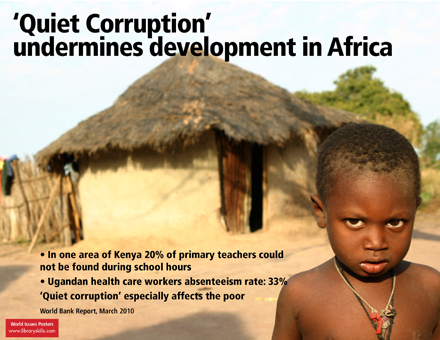
So, ok, relatively speaking it’s not a lot. But in Africa, in absolute term it is wrecking the economy, simply because it permeates down to the little man and is part of the nation’s psyche. The large bribery figures that involve Governments and the like of BAE for example, may possibly hinder development if we assume that the money would have instead been used in providing services and not just pamper a little more the politicians and their cronies. But, on the other hand, the pervasive, almost ingrained and endemic petty corruption that anyone who tries to do a bit of business in Africa faces each time they need a licence, a contract or even the Law to right a wrong is suffocating, and if you can’t pay, well you simply don’t get or have to go through more hoops than you can find at the Burning Man Festival; just as it seems we are currently doing. All these petty bribes to Government officials, school heads, police, Court clerks and even Lawyers are the real breaks on the economy, relentlessly affecting those at the bottom who can’t afford to pay them and putting off anyone with a brain cell from wanting to do business in Africa. Until Africans take it into their own hands to say no once and for all, it will remain a very, very slow climb, up the ladder.
 you never learn mum